
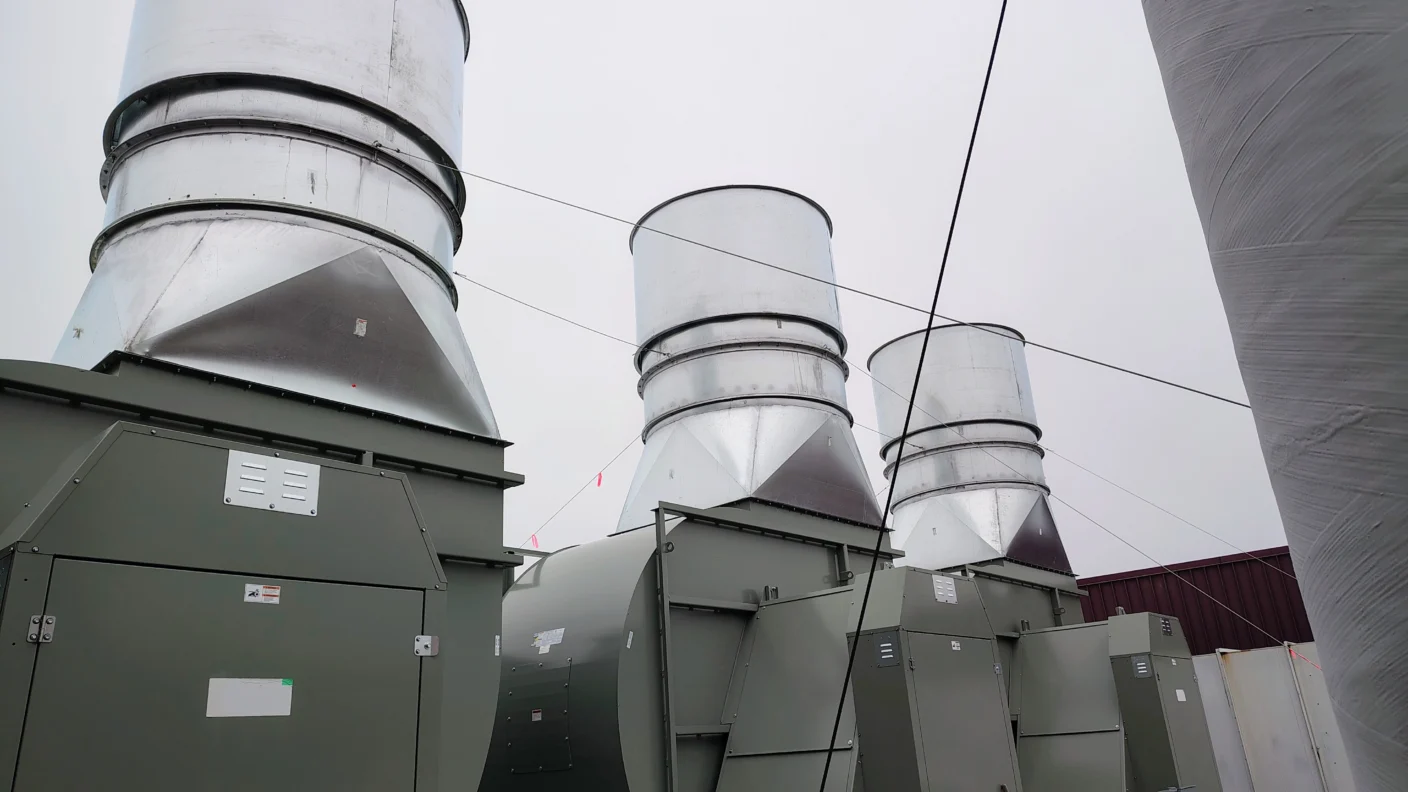
- Upgraded lab exhaust, improving redundancy for uninterrupted operation
- Modernized controls, improving remote equipment operation visibility and alarming in an occupied facility
- Upgraded process cooling equipment, increasing capacity and improving reliability
Oregon State University ALS Controls and Infrastructure Upgrades
Keeping Research Online in an Occupied Lab
At Oregon State University’s Agricultural and Life Sciences (ALS) building, Systems West modernized the mechanical and control systems within a fully occupied, 24/7 laboratory environment, enhancing safety, reliability, and maintainability while minimizing disruption to ongoing research. The facility houses dozens of critical research spaces, fume hoods, cold storage rooms, and its constant-volume exhaust and complex supply-air systems demanded a careful and deliberate approach. Our work focused on upgrading the failing building controls, replacing major rooftop exhaust equipment, and improving the building’s temperature controls, all with the overarching goal of keeping operations stable and uninterrupted research.
Modern Controls for a Smarter, Safer Building
The project began with replacing failing control hardware and implementing sequences that support the unique air supply arrangement serving the facility. Legacy lighting and control systems were updated to improve consistency and predictability, eliminating issues that once left lights flashing or running continuously. We extended corridor lighting dimming capabilities across multiple floors to reduce after-hours energy use while maintaining life safety standards. A critical modernization included removing outdated modem-based dispatch alarms and implementing a direct digital communication system that instantly alerts OSU’s on-call staff to issues, streamlining response and improving reliability. In addition, we incorporated a simple but effective manual alarm system for the building’s numerous cold rooms, protecting staff from potential entrapment and addressing a long-standing safety concern.
Reliability Through Replacement
In many cases, reusing legacy mechanical components was not a sustainable option. We replaced aging coil-trim components, valves, and control assemblies where reuse would have introduced long-term reliability risks. These upgrades reduce maintenance needs and ensure that zone-level controls perform as designed. Throughout the work, the building remained fully operational, requiring detailed sequencing and tight coordination between our team, the contractor, and OSU facilities staff, minimizing the quantity of planned equipment shutdowns.
A Quieter, Redundant Exhaust System
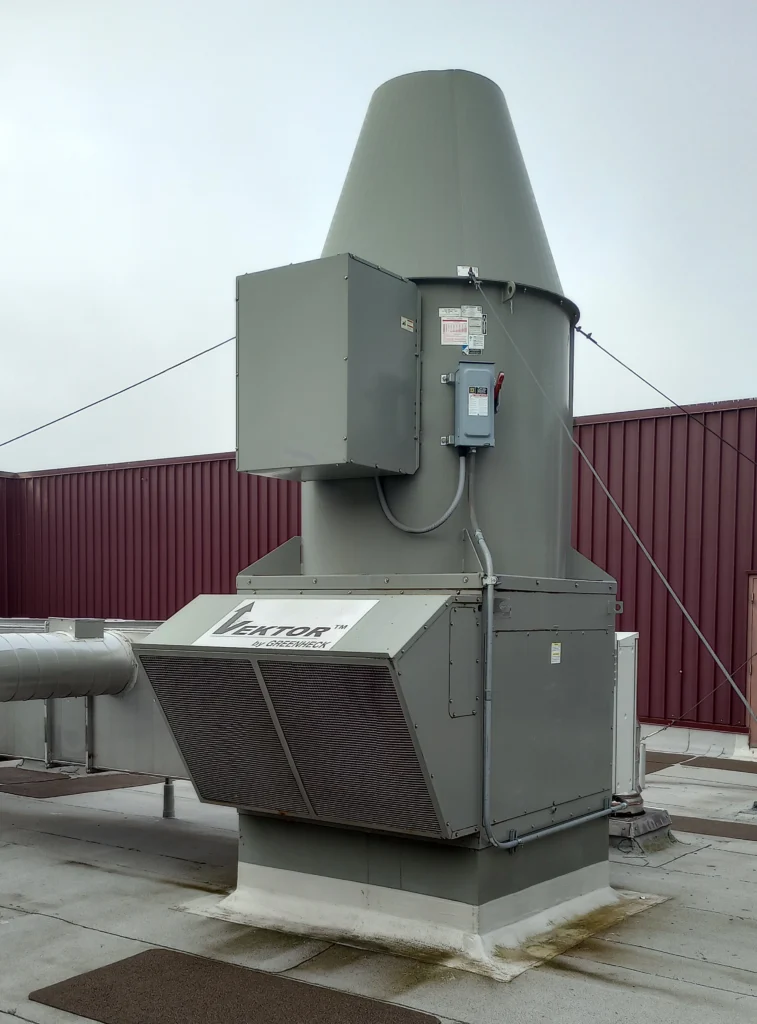
The ALS building’s rooftop exhaust system was reimagined to provide true redundancy, a major step forward for laboratory reliability. Previously, exhaust failure could force researchers to evacuate the building. The new configuration allows for uninterrupted operation even during maintenance or mechanical failure. During construction, our team encountered unexpected field conditions: Existing documentation did not match the physical structure, with concealed concrete curbs and mismatched fan bases. We verified load capacities and selected fan assemblies suited to the actual conditions. The result was a robust, quieter system that better served the building and its occupants.
Upgraded Process Cooling and Simplified Plant Operations
We removed obsolete chillers, condenser-water pumps, and abandoned mechanical systems. These systems were replaced by new Cordley District Utility plant operation. In their place, we introduced a new closed-circuit cooling tower and chilled-water process cooling system, providing reliable, redundant cooling for research equipment and the building’s numerous cold rooms. The upgrade improves system efficiency and gives OSU additional capacity for future growth.
Collaboration That Drove Success
A key to success was the partnership between our design team, Eagle Mountain Construction, and OSU’s facilities staff. The contractor demonstrated exceptional project ownership and communication, coordinating carefully to minimize disruptions. OSU’s facility team provided valuable insights into the building’s unique quirks, helping refine control sequences and resolve long-standing operational issues. Together, we navigated complex scheduling, occupied-building constraints, and cost sensitivity to deliver an upgrade that met OSU’s needs for performance and reliability.
Results and Takeaways
The completed work gave OSU a more resilient, maintainable building equipped with smarter controls, dependable exhaust redundancy, and reliable process cooling. Alarming and communication are now clear and direct, safety systems are simplified, and maintenance staff can manage building performance without workarounds. The project underscored the value of targeted replacement over piecemeal reuse, early field verification of existing conditions, and steadfast commitment to operational continuity. The ALS upgrades ultimately strengthened a critical research facility, ensuring that it continues to serve OSU’s scientific community with greater safety, stability, and efficiency for years to come.

Want to be a part of projects like this? Join Our Team.